各校計畫成果
中興大學玉山學者格魯伊森姆教授第三年結案報告
活動簡介
Nutritious and high-yielding crops are needed to provide sufficient and healthy food to the increasing number of humans while reducing the climate footprint of agriculture. Rice feeds about half of the world population, but the polished rice grain is a poor source of essential vitamins and micronutrients. Our research aims at increasing iron and zinc in the rice endosperm that becomes the polished rice grain for human consumption. We are also increasing provitamin A as well as vitamins B1 and B6, which are important micronutrients for human health. Our biofortified rice lines have been extensively tested in large-scale field experiments for their agronomic performance and trait stability. The micronutrient traits are also introduced into rice varieties from other countries in which rice is the most important staple food. Cassava is a staple crop for about a billion people and especially smallholder farmers in tropical regions of the world. The storage roots of cassava are a main source of starch and food, but often storage root yield in smallholder farmers’ fields is far below what can be achieved with irrigation and fertilization. As part of the international Cassava Source-Sink (CASS) project we are testing various metabolic engineering strategies to improve photosynthetic sugar production in cassava leaves and accelerate the transport of sugars into storage roots where they are converted into starch. Our goal is to increase starch production in storage roots and thereby improving yield while reducing the agricultural footprint of cassava farming. Advanced technologies such as remote imaging of cassava growth using unmanned aerial vehicles (UAV) help us to predict the efficacy of our metabolic engineering strategies.
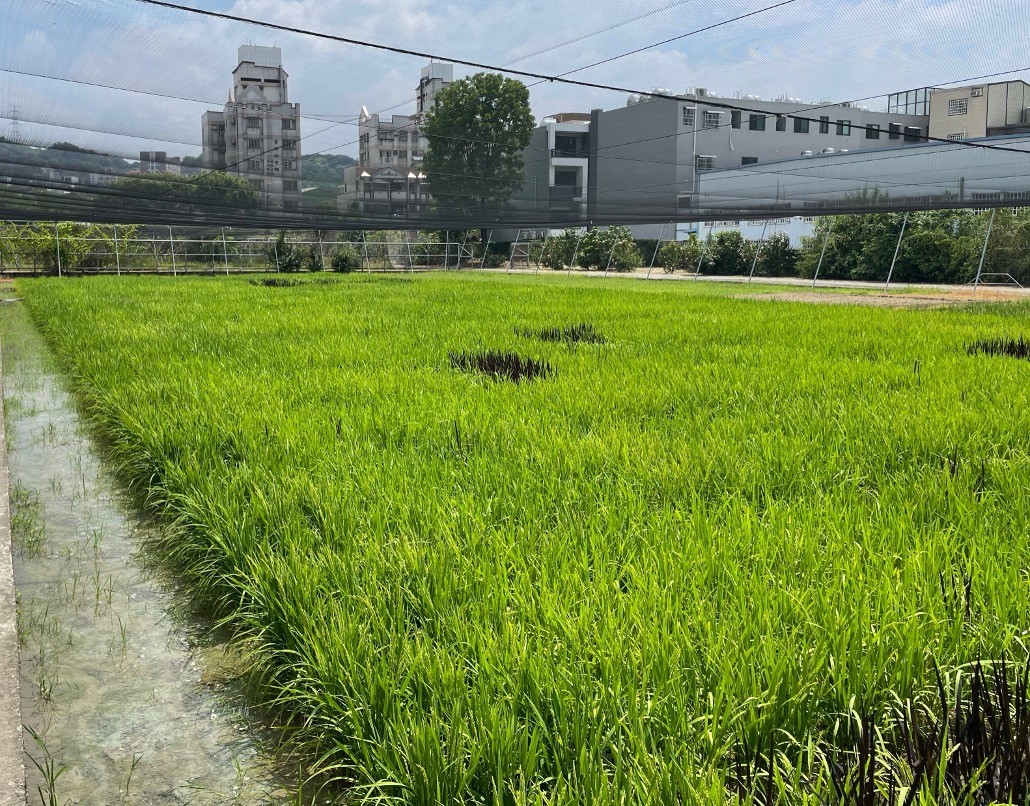
New rice varieties with increased micronutrients for improving human health

Monitoring cassava growth using drones
 回上一頁
 回首頁