各校計畫成果
國立成功大學玉山青年學者蔡欣融助理教授第一期第1年計畫成果
活動簡介
本計畫首年已成功啟動低溫超高真空掃描穿隧顯微鏡建置,並導入二維材料異質結構製程,奠定量子元件研究基礎。同時串聯中研 院及柏克萊等國內外頂尖團隊展開技術交流,並結合雙語與研究導向教學,穩步推進跨領域量子科技發展與人才培育。
In the first year, this project successfully initiated the setup of a
low-temperature ultra-high vacuum scanning tunneling microscope
(LT-UHV STM) and introduced standardized processes for 2D material
heterostructures, laying the foundation for quantum device research.
Concurrently, we established technical exchanges with top domestic and
international institutions, including Academia Sinica and UC Berkeley.
By integrating bilingual and research-oriented teaching, we are steadily
advancing interdisciplinary quantum technology development and talent
cultivation.
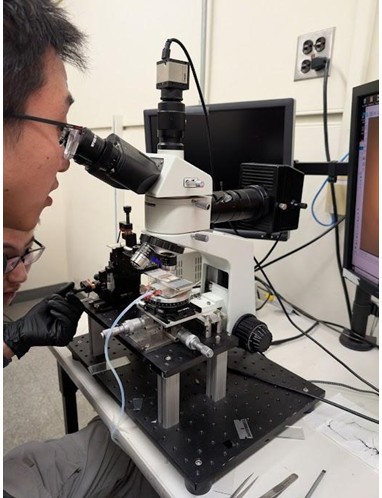
第一年度計畫以建立「原子尺度量子材料與量子元件研究」之核心能力為主要目標,優先投入原子級純淨材料與關鍵製程技術之建立。在硬體建置與製程優化方面,本計畫已順利啟動低溫超高真空掃描穿隧顯微鏡(LT-UHV STM)等關鍵設備之設計與採購,並逐步建立穩定之低溫與超高真空運作環境。同時,團隊成功導入二維材料異質結構之標準化製程流程,並結合原子力探針刮削與真空退火等表面工程技術,大幅提升材料界面潔淨度與可重現性,使材料合成、裝置製作與原位量測得以順利整合為連續性之研究平台。液氦液化機之建
置評估亦同步進行,以支援未來長時間的低溫操作與高靈敏量測需求。
在學術研究推動上,本計畫與中央研究院物理研究所及國立成功大學
物理系建立了「理論預測與實驗驗證」並行之跨機構合作機制。目前研究主軸聚焦於三項具前沿意義之量子物理議題:探討超導近鄰效應
異質結構中之界面耦合與量子傳輸機制、解析石墨烯系統中電子光學
行為與Veselago電子透鏡現象,以及研究強交互作用條件下之電子流體動力學與集體傳輸行為。透過結合掃描探針顯微技術與閘極可調元件架構,團隊正逐步建立由原子尺度材料工程延伸至介觀量子傳輸
量測之完整研究流程。
為擴大研究量能,本計畫積極串聯跨領域與國際合作網絡。在國內跨院系整合方面,已與材料科學系及化學工程學系建立合作機制,將量子材料研究延伸至單層金屬有機骨架(MOF)等分子功能材料合成、
表面工程分析及分子級催化與能源材料領域。在國際技術鏈結上,團隊持續與美國加州大學聖地牙哥分校、加州大學柏克萊分校、普林斯
頓大學及新加坡國立大學等國際頂尖學術團隊,針對顯微技術設計與
量子裝置開發展開深度交流,確保設備規格與研究方向緊密接軌國際
前沿發展。
在創新教學與人才培育方面,本年度配合高等教育深耕計畫與雙語化
學習計畫,將實際研究案例與跨領域應用導入課程設計。透過引進國
外教學影片與線上全英學習資源,不僅強化學生以英語吸收專業知識
及跨文化學習之能力,更引導學生從實際研究問題出發,培養實驗設計思維與自主學習能力。此外,團隊已完成首批研究生與研究助理之
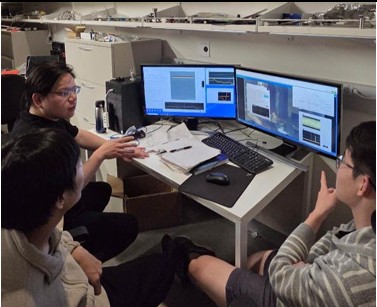
高階設備操作培訓,確實建立團隊之自主運作與研究推進能力。整體
而言,第一年度已成功達成核心研究平台建置、跨系所合作整合、創
新教學推動與國際合作網絡建立等階段性目標,為後續量子電路工程與跨國合作奠定了穩固基礎。
The primary objective of the first year was to establish core
capabilities in atomic-scale quantum materials and device research,
prioritizing the development of atomically pristine materials and key
manufacturing processes. Regarding hardware setup and process
optimization, the project successfully initiated the design and
procurement of crucial equipment, including a low-temperature
ultra-high vacuum scanning tunneling microscope (LT-UHV STM),
gradually building a stable low-temperature and ultra-high vacuum
operational environment. Concurrently, the team introduced standardized
fabrication processes for two-dimensional (2D) material heterostructures.
By incorporating surface engineering techniques such as atomic force
probe scraping and vacuum annealing, we significantly improved
material interface cleanliness and reproducibility. This enables material
synthesis, device fabrication, and in-situ measurement to be seamlessly
integrated into a continuous research platform. Technical evaluation for a liquid helium liquefier is also underway to support future long-term
low-temperature operations and highly sensitive measurements.
In advancing academic research, the project established a
cross-institutional collaboration mechanism with the Institute of Physics
at Academia Sinica and the Department of Physics at National Cheng
Kung University, running "theoretical prediction and experimental
verification" in parallel. The current research focuses on three frontier
quantum physics topics: exploring interface coupling and quantum
transport mechanisms in superconducting proximity effect
heterostructures, analyzing electron optics behaviors and Veselago
electron lensing phenomena in graphene systems, and investigating
electron hydrodynamics and collective transport behaviors under strong
interaction conditions. By combining scanning probe microscopy with
gate-tunable device architectures, the team is gradually building a
comprehensive research workflow extending from atomic-scale material
engineering to mesoscopic quantum transport measurements.
To expand our research capacity, the project actively connects
interdisciplinary and international collaboration networks. For domestic
cross-departmental integration, collaborative mechanisms have been
established with the Department of Materials Science and Engineering
and the Department of Chemical Engineering. This extends quantum
materials research into the synthesis of molecular functional materials
(such as monolayer metal-organic frameworks, MOFs), surface
engineering analysis, and molecular-level catalytic and energy materials.
Internationally, the team continues to engage in in-depth technical
exchanges regarding microscopy design and quantum device
development with top-tier research groups at UC San Diego, UC
Berkeley, Princeton University, and the National University of
Singapore, ensuring our equipment specifications and research directions
closely align with the forefront of international developments.
Regarding innovative teaching and talent cultivation, this year's efforts
aligned with the Higher Education Sprout Project and the Bilingual
Education Program by integrating real-world research cases and
interdisciplinary applications into course designs. By incorporating
foreign instructional videos and online English learning resources, we
strengthened students' abilities to absorb professional knowledge in
English and engage in cross-cultural learning. Furthermore, we guided
students to approach experimental design and develop self-directed
learning skills based on actual research problems. The team has also
completed operational training on advanced equipment for the first cohort
of graduate students and research assistants, solidifying the team's
capacity for independent operation and research advancement. Overall,
the first year successfully achieved phase objectives in core platform
setup, cross-departmental integration, teaching innovation, and
international networking, laying a robust foundation for future quantum
circuit engineering and transnational collaborations.
 回上一頁
 回首頁